
A perfect listing still loses the sale if you do not own the buy box or the product is out of stock.
The same scoring logic as Content Control, built on a different set of data points: availability, buy box, takedowns, delivery, deals, ratings and bestseller rank.
The operational side of the digital shelf
How it works
You define what retail ready means. We measure it.
Content Control scores what the listing says. PDP and Logistics scores whether it is actually buyable. You choose which operational data points matter for your category and how much each one counts.
The result is a single PDP score per product, per website, per update, built the same way as your content score but from operational rather than content data.
The result is a single PDP score per product, per website, per update, built the same way as your content score but from operational rather than content data.
Know who owns the buy box
See which seller holds the buy box on each product and platform, and how often that changes. It tells you who is actually converting the demand you create.
Catch takedowns before sales drop
When a listing disappears, is suppressed or goes out of stock, the score moves and you are told. Without monitoring, that usually surfaces weeks later in a sales report.
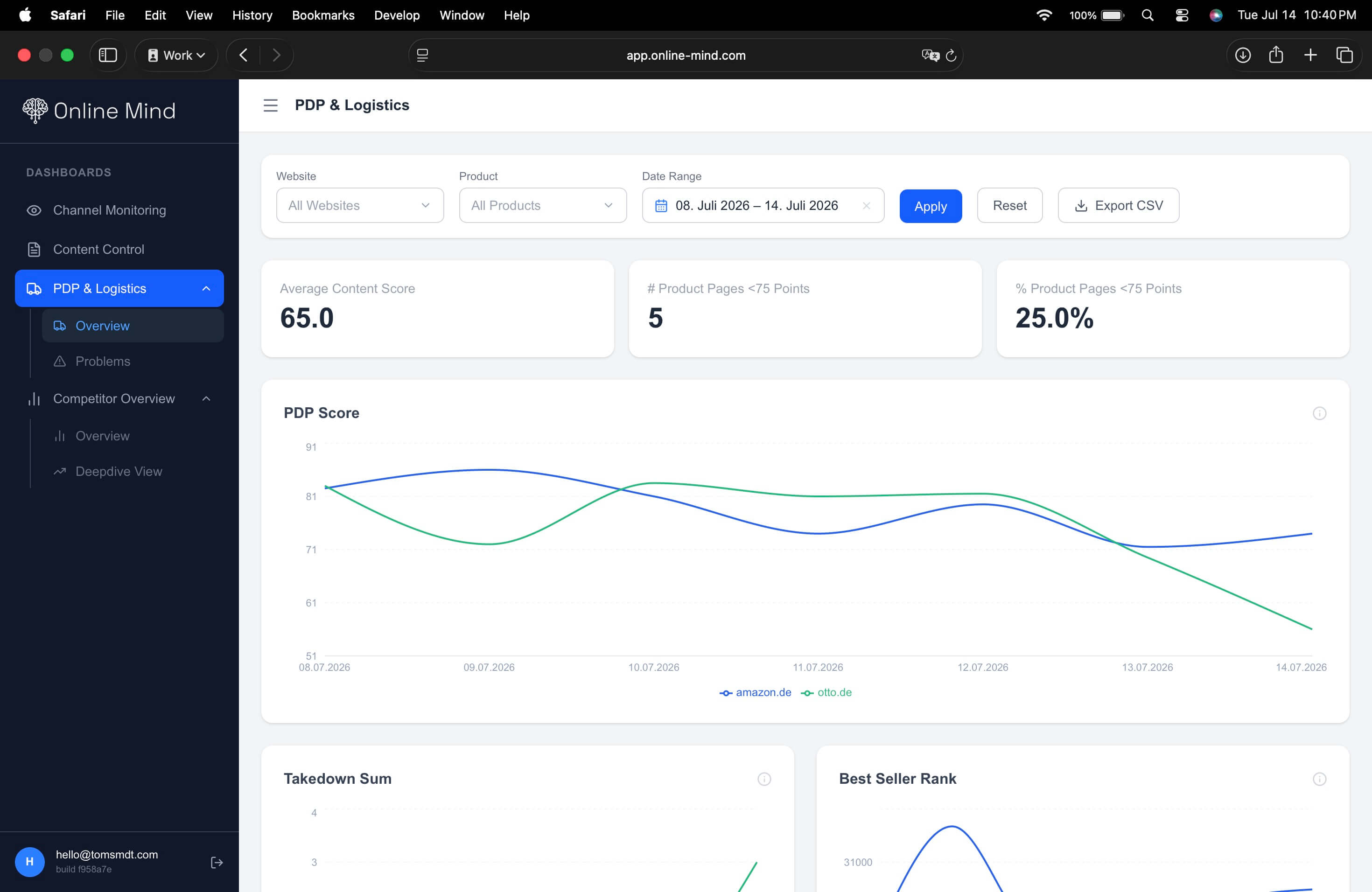
One PDP score per product, per platform
Recorded per date, SKU and website, so you can see at a glance which products are retail ready, which are borderline, and which have dropped below your threshold. Pricing decisions remain with each seller, as required under EU competition law.
No manual availability checks
No separate logins per marketplace
Dashboard or spreadsheet export
Get alerted when status changes
Buy box lost, listing taken down, stock at zero, delivery time slipping. Online Mind records the change and tells you what changed, on which platform, and when.
The data points
What feeds your PDP score, recorded per product and website.
PDP Score
One weighted score per product and platform
Availability
In stock, limited or unavailable, per website
Buy box
Who owns it, plus a true or false flag per update
Takedown flag
Marks listings pulled or suppressed since the last update
Fastest delivery
The quickest shipping option the buyer is shown
Deal status
Whether a deal or promotion badge is running on the listing
Rating and review volume
Star rating alongside how many times the product was rated
Bestseller rank
Overall bestseller position, plus any custom data point you need
Tracked across global marketplaces and retailer platforms
AmazonMediaMarktOttoIdealoAlternate.deEuronicsGalaxusFnacDartyCdiscountBol.comCoolblueEl Corte InglésPcComponentesUnieuroAllegroElgigantenPowerCurrysBest Buy
A selection of what we cover. Further marketplaces and retailer websites are added to match your distribution landscape.
Quick Answers
FAQ
Common questions about PDP and logistics monitoring
What is PDP and logistics monitoring?
It tracks the operational state of your product pages rather than their content: who owns the buy box, whether the listing is live, whether stock is available, and what delivery the buyer is promised. Online Mind scores each product and platform against the criteria you define.
How is this different from Content Control?
The scoring engine is identical. Only the data points differ. Content Control reads images, titles, bullets and premium content. PDP and Logistics reads availability, buy box, takedown flags, fastest delivery, deals, ratings and bestseller rank.
Why does buy box ownership matter to a brand?
The buy box owner captures most of the demand on that listing. If an unmanaged or grey market seller holds it, your marketing spend converts into their sale, on their service level, with their handling of returns and warranty. Online Mind records who holds it and how often that changes.
What happens when a listing gets taken down?
Online Mind records it and alerts you: what changed, on which platform, and when. That is usually the difference between reacting the same week and finding out through a sales report a month later.
How often is the data updated?
At the update frequency you choose. Most tools stop at daily; Online Mind can go down to sub-hourly on the SKUs and platforms where timing actually changes the decision.